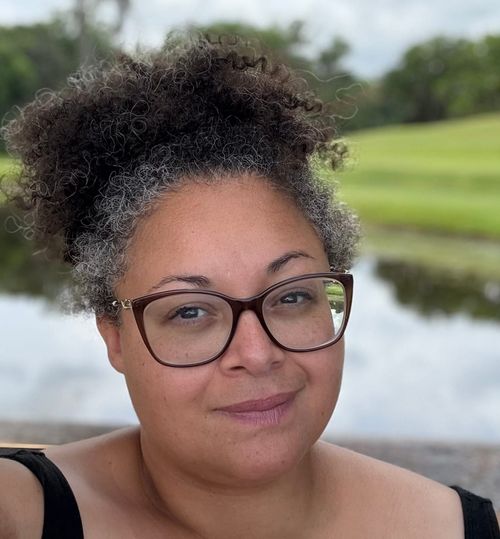
When I first moved to Los Angeles, I felt deeply unwelcome. I was called the n word with stunning frequency, and the racism was shocking and overt. Experiencing a disturbing hate incident on the Metro with my husband and then-infant daughter was the final straw as hate crimes against Black residents climbed and reached near-record highs. My family did not feel safe in Los Angeles, and five years ago, I started searching for a new neighborhood.
“Have you heard of Altadena?” a Black friend asked me.
He described it like some sort of mythical oasis, but our apartment building had just been battered by days of riots so I was all ears. Altadena, he said, was a Black refuge, a safe haven for middle class Black families who fled the racist policies of Los Angeles and Pasadena and formed a thriving, welcoming community sandwiched between sundown towns. His own biracial family found stability and security there and my interest was piqued in this historically important enclave of Black professionals, artists, and academics.
Altadena’s founding legacy is liberty; its earliest residents were freed slaves, abolitionists, and Union soldiers. Ultra-wealthy industrial magnates soon swept in, and by the Great Depression, public officials were colluding with mortgage lenders to heavily redline West Altadena due to what they called a “threat of subversive racial infiltration." In 1939, the Home Owners Loan Corporation, via the Federal Housing Administration, released graded maps for mortgage lenders reflecting the racial purity of neighborhoods, rendering areas with high Black populations with the most unfavorable mortgage and insurance rates. In 1941, the Altadena Property Owners’ League offered racial covenants for five dollars, and a shocking 80 percent of white Altadenans added them to their properties. Some areas of West Altadena were not impacted by these efforts and allowed for Black homeownership to flourish. By 1960, these decades of insidious redlining and racial covenants led to a stark east-west racial housing divide.

Between 1960 and 1980, Altadena’s Black population rose from four to 43 percent, with the highest concentration of Black residents settling in West Altadena. “West Altadena was built by Black families,” declared Collective UNbound, a new architecture and design organization premised upon racial justice and community empowerment. The Civil Rights Act of 1964 and Fair Housing Act of 1968 ended de jure racism of redlining and racial covenants, but de facto racism persisted and affirmed the east-west racial housing divide as local Altadena real estate agents refused to show houses east of Lake Avenue to Black families. West Altadena, with its decades of “hazardous” and “declining” redlining grading, was essentially abdicated and a 20 year period of rapid Black growth created one of Los Angeles’ most culturally and economically vibrant and historically important communities.

Much of the physical signs of that history was destroyed in the Eaton Fire, but even in recent pre-fire years, Altadena’s history was shifting again. Gentrification was hastening Black flight in Altadena. It remained the most desirable place for middle class Black families to be— but COVID and Los Angeles’ rapidly deteriorating public safety made Altadena and the broader Foothills communities desirable for all young middle class families. Altadena became a multicultural middle class haven. With the post-COVID migration, Altadena’s Black population declined to 18 percent at the time of the fire.
Altadena’s rapid diversification and gentrification are not bad things, especially as other communities who have experienced shared injustice and systemic racism in Los Angeles, such as Japanese Americans, have also found a safe haven there. Were it not for the Eaton Fire, we might be having a different community conversation of how we preserve the cultural markers of West Altadena while continuing social and economic progress. However, the question of racial disparities in Los Angeles’ fire response, the disproportionate destruction of West Altadena, and systemic historic racial injustices made salient in Altadena’s fire recovery have catalyzed a movement to ensure that Black Altadena’s hard-fought history of uncommon perseverance remains centered, celebrated, and preserved.

On May 13, Collective UNbound, along with local preservationists and leaders from across Altadena, led a community meeting entitled “Shared Futures and Sacred Spaces” to discuss the potential designation of a Black Cultural District in West Altadena. “The Eaton Fire didn’t start displacement— it accelerated it,” Collective UNbound stated, and “without intentional protection, what generations built can be lost.”

The California Cultural Districts program was established in 2015 under AB 189, authored by Assemblyman Richard Bloom. AB 189 vested the California Arts Council with the authority to “identify, designate, and promote areas of concentrated cultural activity,” in order to “hel[p] communities harness their unique cultural assets to stimulate local economies, attract tourism, preserve historic sites, and support vibrant, inclusive creative economies.” In December, the California Arts Council designated South LA as California’s first Historic Black Cultural District. With the designation, advocates expect that the state will invest at least $2 million to help promote tourism. Building on South LA’s designation, Altadena community organizers, under the umbrella of the Altadena Black Cultural District, approached Assemblyman John Harabedian to ask for his support in pursuing a similar designation for West Altadena.
On March 5, Assemblyman Harabedian formally requested a $5 million budget allocation to support the California Arts Council in designating a West Altadena Black Cultural District. Collective UNbound and the Altadena Black Cultural District did not respond to questions about the $5 million request. They are also exploring how to obtain a similar designation from the county of Los Angeles as well, though it does not have a formal process.
Organizers admit this designation does nothing to help with the immediate need of keeping Black residents on their properties. For many displaced Black Altadenans, this designation seems a waste of resources that they believe could be better spent on direct assistance programs instead of shifting money around bureaucratic coffers. Still, many others don’t believe anything would bring them back to Altadena, especially the 57% of Black Altadena homeowners who are elderly and have little interest or ability in starting over.
The Altadena Black Cultural District group believes that the designation is a “policy and funding tool that unlocks state arts investment, supports anti-displacement land use protections, preservation, and can give communities a formal seat at the table in development decisions.” It’s unclear how this costly bureaucratic process better aids in these goals than the boots on the ground collective action that has defined Altadena’s fire recovery. The designation “does not automatically stop displacement, freeze housing prices, or guarantee funding,” admitted Altadena Councilmember Isis Moulden. “Its strength depends on organized community leadership, accountability, and continued participation.” Altadena already had those virtues in spades.
The glory of West Altadena was in how it eschewed bureaucracy and built a paradise of belonging by its own hands in spite of government, and it seems irreverent to vest its future in new layers of it. I have a very difficult time believing that the brave and determined founding families of West Altadena would feel honored by petitioning the state legislature to give $5 million to a council of 11 immensely wealthy unelected non-Black elites to rubber stamp Black history. That staggering sum could build a museum or fund a series of monumental art. It could rebuild several historic homes or offset the rebuild cost gap of 10 homes. It could cover a month’s rent for a thousand displaced families. It could provide a year’s worth of groceries for 500 households. It could fund 100,000 Lil’ Lotus Kits.
Five million dollars is a staggering sum to convince outside bureaucratic, unelected elites to accept and tell West Altadena’s tale when we have the collective power and artistic talent to do that on our own. Other community members have openly questioned whether the state funding advantage they expect to gain from this designation is even legal under Prop 209 and federal law.
Pasadena NAACP President Brandon Lamar powerfully stressed, “Government has never been here to protect Black families.” There is zero indication that the current state or county government will do so, either. In fact, one of the nearly unanimous community sentiments after the fire was that Altadena needed to lessen its reliance on state and county government and move to incorporate as its own city. Many of the Altadena Black Cultural District group’s aims seem like they would be more achievable under local governance. Over nearly four hours, the many community speakers at the May 13 meeting made impassioned pleas for a locally-led effort to preserve West Altadena’s Black history, but none made the case for why this particular bureaucratic $5 million Black Cultural District designation is the best way to do it. In fact, the frequent invocation of government harm suggested the opposite.
Disclaimer: The content shared in our blog is for informational purposes only and should not be considered legal, medical, or financial advice. Please consult with a qualified professional for guidance specific to your situation.